
What is The Best Home Heating Temperature For The Winter?

winter

What is The Best Home Heating Temperature For The Winter?

One of the best things about living in the midwest is getting to see the seasons change every year. From the bright colors in the spring and summer to the golden browns in the fall, and the enchanting white winters, we see it all here in Michigan.

We also know, though, that as beautiful a white winter may be, it is also devastatingly cold. That's why it is vital to keep your home nice and warm during colder months. But what is the perfect temperature to keep your home?

There are a few different factors that go into that, including, the temperature itself, the thermostat, and your energy bill.

Temperature

temperatureWhile you may be tempted to raise the temperature in your home as much as possible on those chilly winter days, keeping your home extra warm is also wasteful, as the higher the temperature inside, the faster the thermal energy will be lost to the outside.

Keeping your home at a lower temperature will slow the process of thermal energy being lost. So what temperature is ideal?

The best way to stay comfortable without throwing away your heated air is to keep your home between 68 and 72 degrees while people are home, and between 58 and 62 degrees when the house is empty.

Thermostat

thermostatThere are several different kinds of thermostats on the market today, at different technological levels. From the most basic to the most high-tech, having the right thermostat can significantly improve your experience with the temperature in your home.

Mechanical or manual thermostat- This is the most basic thermostat. Similar to the way a light switch works, you can "flip" it to the desired temperature, and it will stay there until you "flip" it off.

Digital non-programmable thermostat- These are manually controlled thermostats, but with a digital display, so the temperature is easier to see.

Programmable thermostat- Set your desired temperature, and your thermostat will take it from there. This thermostat regulates temperature on its own based on a pre-entered program. Some will let you set programmed temperatures for each day o the week, for weekdays/ weekends, or one program for the entire week.

Electric Bill
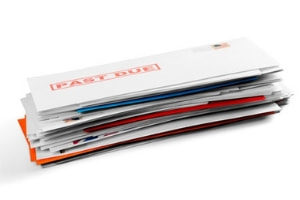
billsIt is no secret that having your heater working at full force 24/7 during the winter is not wise. It may keep you warm, but it will also drive your electricity bill through the roof!

As we mentioned earlier, higher temperatures indoors can lead to more thermal energy loss, so you could be paying more to waste hot air on the outside.

Another tip for keeping your energy bill manageable during the winter is to lower the temperature by about 5 to 10 degrees at night or while no one is at home. You can make up for the loss of warmth at night by investing in warmer flannel sheets and pajamas.

Got some cold weather tips of your own? Leave them in the comments below for our readers to see! If you need heating services this winter, count of The Meridian Company to provide them! Give us a call at (517) 339-6300 for service in East Lansing.
Secret Reasons Your HVAC System Should be Replaced

replacehvac

Secret Reasons Your HVAC System Should be Replaced

Replacing your HVAC system is not always everyone’s first choice solution when it comes to broken down heaters or AC units. True, HVAC installation can be pricey. A new unit can cost anywhere from $6,000 to $8,500. If you also need to replace your ducts, that can add another 10%-15% onto the total cost.

The good news, though, is that you’ll likely earn all that money back with monthly energy savings, and all the money you’ll save on those frequent HVAC repair services! Continue reading to learn a bit more about some lesser-known reasons you’ll need to replace your HVAC system.

Deadly Carbon Monoxide

“carbonmonoxideleak”Without a doubt, if your HVAC system is producing carbon monoxide that is leaking into your home, it’s time to replace it.
Carbon monoxide poisoning, even in its mildest form, can cause symptoms similar to those of food poisoning or the flu. In more severe cases, carbon monoxide poisoning can lead to death.

How can you tell if there is a leak of colorless, odorless, tasteless gas in your home? Keep an eye out for any of these indicators:

  • Unpleasant rotten egg or sulfur smell.
  • Damaged gas connections in your HVAC unit.
  • Dead or dying vegetation around your yard.
  • Water or dirt entering the air near the gas source.
  • Condensation on your windows.
  • Nausea, dizziness, fatigue, passing out, headaches, and other unexplained health symptoms.

If any of these symptoms are present in your home, evacuate immediately and call for help once you are safely away.

How Old is Your HVAC System?

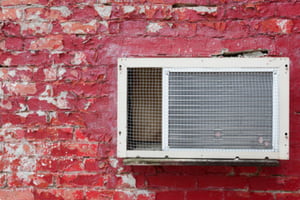
“oldairconditioner”If your system is more than 12 years old, it's time to replace it. After about 10 to 12 years, most HVAC systems will still run, but they will run less efficiently, causing you to lose money on cooling and heating.

After a certain age, HVAC systems will start to fail in doing their job of evenly heating or cooling the entire house evenly. You may even be experiencing a humidity issue in your home.

If so, it is likely because the ductwork hasn't been replaced in well over a decade. Finally, you'll notice that your unit is in almost constant need of repairs and that your energy bill continues to rise, even though there has been no change in energy usage.

The Motor or Compressor Are Acting Up

“systemfail”Compressor burnout and blower motor failure are serious and often expensive issues. In fact, they can be so costly that if either one occurs, you may as well replace the entire unit.

More often than not, a burned out compressor or a damaged motor can be avoided by maintaining regular diagnostic visits. When your unit isn't properly maintained, it can lead to all kinds of malfunctions within crucial components.

Another common cause of severe motor and compressor failure is- you guessed it!- age. After running almost every day for over 10 years, the day may have finally come where your unit's motor and compressor are no longer able to work.

What That Weird HVAC System Smell Means

hvacsmellsbad

What That Weird HVAC System Smell Means

If you notice any weird and unpleasant smells coming from your home HVAC system, it may be your system’s way of telling you that something is wrong! What does your particular HVAC smell mean? Well, the most common smells customers complain about are a foul, rotten eggs smell, a musty smell, and a burning smell.

Each of these smells hints at very different HVAC problems, so make sure you are paying attention to what you are smelling, what it could mean, and how a highly trained professional could help you. Call The Meridian Company for any HVAC services you need.

Rotten Egg Smell = Gas

“gassmell”If you smell something akin to rotten eggs in your house (assuming, of course, that you don't have actual rotten eggs in your home) the smell is likely coming from a gas leak in your HVAC system.

Prolonged exposure to natural gas and carbon monoxide can lead to headaches, nausea and vomiting, dizziness, upset stomach, and eventually, death.

If you suspect a gas leak, open all the windows in order to dissipate the gas and air out the house. Without turning anything on or off, quickly evacuate the house. Do not use any electronic devices, or start your car, as the gas in the air could cause an explosion. Once you are safely away from your house, call the gas company and explain the situation.

Musty Smell = Mold

“oldsmell”A musty smell coming from the air vents around your home may signify an accumulation of moisture in your air ducts, making them a breeding ground for mold.

Mold in your home can agitate health conditions like allergies, or asthma. Call a trusted HVAC company for a duct cleaning to take care of musty air ducts.

The smell can also be coming from within your heating or AC unit. When the unit's drip pan, which catches excess moisture from condensation, is full or becomes clogged, it can cause excess moisture to collect inside the unit. Again, a simple cleaning of the drip pan can help to keep that moisture out of your HVAC unit.

Burning = Overheating

“burntsmell”If you smell something in your HVAC system burning the first time you turn it on in a while, there’s nothing to worry about. The smell is probably coming from an accumulation of dust that has settled in various areas of your heating unit over the summer.

Once the dust has all burned away, the smell will dissipate. If the smell lasts more than a few minutes and doesn’t go away, the problem can be easily fixed by cleaning your unit, changing the air filter, replacing a part that has become worn out, or lubricating the bearings. Don’t delay in having your HVAC systems undergo maintenance!

The longer the unit has to run under less-than-ideal conditions, the higher the chances that it will need more costly repairs. For example, if a simple tune-up doesn’t fix the problem, you may need to replace the fan motor or, in extreme cases, the entire unit.

Discover More About Replacing Your Heating and AC at the Same Time

replaceheatingac

Discover More About Replacing Your Heating and AC at the Same Time

Anybody who owns a home in East Lansing, MI and has faced the prospect of replacing either a heater or air conditioner may have wondered if it makes the most sense to replace both HVAC devices at once. There can be benefits to doing so, but if you take a closer look, the answer really depends on the circumstances.

Sometimes it's best to spend the extra money and get a new furnace and AC, while other times it's not a good idea. If you're struggling with this decision yourself, we can help. Read on to discover more about replacing your furnace and AC at the same time.

Always Consult an HVAC Specialist First

“whatpros”Before we get into it, the best way you can help yourself is by contacting an HVAC specialist and requesting an inspection of both your furnace and air conditioner.

This will give you an accurate analysis of the devices and give you a better sense of whether or not they need to be replaced.

In addition, there's a chance you may be able to extend the life of both units.

Is it Time to Buy a New Furnace or AC?

“isittime”There are a number of reasons you may want to replace these HVAC devices at the same time, and they include:

You're Closing in on Retirement
If you're about to retire, you may want to upgrade your home's comfort devices before you start living on a fixed income. Start things off fresh by upgrading both your furnace and air conditioner.

High Difficulty Installing New Devices
If your home has a weird setup that makes it difficult to reach the HVAC system, such as if it's hidden behind a crawl space, replacing any components may come at an extra cost. Contractors often factor in the difficulty of a job in their fees. If this applies to your home, it may be sound advice to replace both your furnace and AC at the same time.

Buying Modern, Eco-Friendly Models
Both your furnace and air conditioner actually share a number of components, since they're both connected directly with the HVAC system. If you buy an energy efficient furnace or AC but still use an old version of the other unit, the performance of the new model may be decreased. If you want to make sure your modern device is reaching its full potential, consider upgrading both units.

The Furnace Is Getting Pretty Old
Furnaces are meant to last approximately 20 years, and air conditioners about 10 years. Depending on the model and difficulty of the job, replacing a furnace will set you back $2,000-$5,000. On the other hand, if you install a new AC at the same time, the price of a new furnace goes down to $1,000-$2,000. If your old furnace is over 10 years old, it simply makes sense from a financial point of view to replace both devices.

Times You Shouldn't Buy a New Air Conditioner and Furnace

“timeismoney”It's not always the right choice to replace both of these HVAC devices at the same time.
If you're unable to afford a second unit, don't feel the need to scrounge up the cash for it. Also, if your furnace is under 10 years old, isn't any need to replace it at all.

The best thing you can do is be mindful of your needs and budget when making major buying decisions.

Energy-Saving Hacks to Make the Most of Your Heat in Winter

Energy Efficiency

Energy-Saving Hacks to Make the Most of Your Heat in Winter

Energy efficiency is something that many homeowners get interested in for a few reasons. Sometimes, there’s environmentalism in mind, not wanting to be wasteful with the way you use your home resources, and reducing your carbon footprint.

For other people, energy efficiency is all about money, heating system efficiency, and keeping energy bills as low as possible. The great thing is, energy efficiency addresses both these needs, and if you’d like to be more energy efficient this winter, we’ve got some cost-effective hacks to help you get going.

Caulk Up Your Window Frames

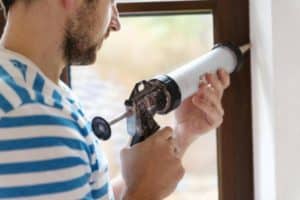
Caulk WindowsIn any home, the window and its frame are always going to be one of the “weak points” when trying to find places that heat leaks.

This is important because, unlike your walls or your roof, you can’t just put insulation in to act as a protective layer. With older window frames, such as those made of wood, that constant exposure to time, temperature changes, and the elements can eventually cause breaks.

One cost-effective solution to this problem is getting quality, weather-resistant caulk and inspecting your frames. Wherever you find breaks, cracks or other defects, just seal it up with the caulk. No matter how small these breaks are, they all add up to more money lost to your heating unless they get plugged up.

Insulate Your Windows

Insulated WindowsAn expensive, but effective solution to heat leaking from your windows is to simply get new windows. The latest products have all kinds of new features like more durable frames, multiple panes of glass, as well as layers of gas to act like insulators.
Of course, this solution, while adding a lot of value to a home, is often quite a bit more than what people are prepared to pay for energy efficiency.

The other option for people looking to save money without spending a lot is to get window insulation film from the local hardware store. Once it is applied to a window, it is stretched tight with hot air from a hairdryer, and it creates its own layer of insulating air. Now warm air doesn’t make direct contact with cold glass and immediately radiate out!

Reverse Your Ceiling Fan

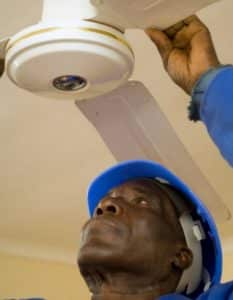
Ceiling Fan Everyone knows that a ceiling fan is great for keeping cool during the summer, though lots of homeowners stopped using these fixtures once centralized AC was installed.


However, what’s less well known is that ceiling fans can also help with energy efficiency during the winter. All you need to do is reverse the settings on the fan.

It’s easy to understand the summer benefits. A fan normally runs at high speed, turning counter-clockwise during hot days. This creates a wind chill effect, the pleasant breeze that people enjoy, as air is pushed down at high speed.

In the winter, when furnaces are sending hot air into vents in the floor, a ceiling fan keeps the room warmer for longer periods. Putting a fan on slow speed, rotating clockwise now pulls warm air up, and redistributes throughout the room, rather than letting it sit too close to windows and start leaking out.

It takes a little bit more thought and effort to stay on top of energy efficiency, but for people who do, those heating bills during the winter in Lansing, MI don’t have to put a big hurt on the wallet every month!